How to Use AI Writers to Scale SEO Content Without Sacrificing Quality
Detailed article on how to use AI Writers to Scale SEO Content Without Sacrificing Quality
Posted by
 Oleg Kozynenko
Related reading
The Ultimate Guide to AI Powered SEO Content Strategy
Picture this. It’s Monday, 8:30 a.m., coffee in hand. You’re juggling 1,200 keywords in a spreadsheet, opening 11 tabs to compare SERPs, building briefs by hand, and begging teammates for internal link suggestions. By noon, you’ve written… a title. Now flip it. You upload those queries into an AI-orchestrated workflow. It clusters them by search intent, drafts a brief with entities to cover, surfaces internal link opportunities, and flags gaps against competitors. By noon, you’re editing a strong draft and planning the next cluster.
How to Choose the Best AI SEO Tools for Your Content Workflow
Atlas Content had the right people. Smart strategists, solid writers, a reliable dev. But their SEO workflow was stuck in the past. They were juggling keyword research in spreadsheets, copying SERP data into briefs, and manually grading content against competitors. Technical checks lived in a separate crawler export. Monthly reporting took three days and stole time from strategy. Sound familiar?
Streamlining Your SEO Workflow with All-in-One AI Tools
You know the drill. Five tabs open for keyword research, a spreadsheet for mapping topics, a separate crawler, a content editor plugin, and a reporting deck that takes half a day to update. By Friday, you’ve spent more time stitching tools together than actually moving rankings.
Imagine this: a SaaS startup, locked in the fierce grip of mid-page obscurity, implements a single, overlooked tweak to its internal linking structure—shifting key product pages from nine clicks deep to three—and watches organic traffic surge by 42% in less than a week. The difference? Not just textbook on-page optimization, but refined, advanced strategy: the kind that dissects algorithms, aligns precisely with user intent, and orchestrates every element on the page toward authority and relevance.
In a landscape where foundational SEO gets you to the starting line but rarely to the winner’s circle, mastering advanced on-page optimization is the edge that separates true leaders from the crowd. If you already understand meta tags and keyword basics, but hunger for the frameworks real pros use to outpace their competition, you’re in the right place.
This definitive guide unpacks the strategies and systems that drive sustainable, future-proof SEO wins. Inside, you’ll find step-by-step frameworks, practical checklists, annotated screenshots, and visual blueprints—each engineered to help you structure content, perfect metadata, architect internal linking, and harness technical schema for maximum SERP visibility.
You won’t just learn what to do, but exactly how and why the most advanced practitioners create sites that dominate their niche. Ready to transform your website into a high-performance SEO asset? Let’s peel back the layers and unlock the full potential of advanced on-page optimization.
What Is Advanced On-Page SEO? (And Why It Matters)
At its core, advanced on-page optimization is the strategic discipline of orchestrating every visible and invisible element on your site to satisfy—and anticipate—the algorithms and user behaviors that drive today’s SERP dominance. Where basic on-page SEO focuses on keywords and meta tags to check generic boxes, advanced optimization builds a layered, interconnected architecture: every heading sequence, internal link, structured data markup, and content cluster aligns to target intent, maximize crawlability, and fortify authority signals.
Contrasting Outcomes: Basic vs. Advanced
Consider two ecommerce sites selling the same trending gadget:
- Site A sprinkles the main keyword three times, sets a generic meta title (“Best Bluetooth Speakers 2024”), and features a static product description. The page is findable—but invisible beyond page four of results, seeing a modest trickle of traffic.
- Site B—driven by advanced on-page SEO—maps user intent to four subtopics (unboxing, comparisons, troubleshooting, FAQs), creates a semantic topic cluster linking supportive guides, dynamically updates content for freshness, leverages FAQPage schema, and ties in authoritative internal links from a “hub” audio guide. The result? Site B outranks Site A for short and long-tail queries, snags a coveted FAQ-rich snippet, and earns triple the click-through rate—all without a single keyword-stuffed heading.
Layers of Advanced On-Page SEO
- Content Structure: Topic clusters, semantic mapping, depth & freshness
- Metadata Optimization: Compelling, intent-filled titles/descriptions
- Internal Linking: Authority flow, contextual relevance, content hubs
- Schema Markup: Rich snippets, structured data, enhanced visibility
- Continuous Alignment: Real-time intent matching, algorithmic adaptation
Actionable Framework: Basic vs. Advanced On-Page SEO
| Task | Basic Approach | Advanced SEO Strategy |
|---|---|---|
| Content | Keyword placement | Synced topic clusters & semantic relevance |
| Metadata | Generic titles/descriptions | Emotional triggers, power words, multi-intent targeting |
| Internal Linking | Occasional manual links | Siloed hubs with anchor diversity & authority flow |
| Schema Markup | Omitted or minimal | Advanced schema (FAQ, HowTo, Product, Review, etc.) |
| Audit/Improvement | Set-and-forget | Continuous, data-driven refinement |
“True SEO leadership is about depth, not just checklists—that means crafting content ecosystems and technical signals that satisfy both users and algorithms, every single time.” —Aleyda Solis, International SEO Consultant
The stakes? With more sites chasing the same SERP territory, only advanced on-page optimization delivers the holistic authority, relevance, and adaptability needed to win—and keep—top rankings.
Understanding the playing field, let’s see how to structure your content to outperform competitors.
Structuring Content for Maximum SEO Impact
Outstanding on-page optimization begins not with keywords, but with architecture—a blueprint that transforms scattered posts into a durable, interlinked knowledge ecosystem. At the advanced level, structuring content is both an art and a science: it harnesses topic clusters, semantic depth, ruthless hierarchy, and freshness cues to send unmistakable signals of relevance and authority to both users and search engines.
From Topics to Clusters: The Advanced Content Framework
Whereas basic SEO may treat each page as an island, advanced on-page optimization orchestrates a network: hubs, spokes, and meaningful connections. Topic clustering is the heart of this methodology.
What are Topic Clusters? A topic cluster is an organized constellation of content that revolves around a central, authoritative “pillar” page. That pillar targets a core topic (e.g., “on-page SEO optimization”), while supporting “cluster” pages dive deep into specific subtopics (e.g., “optimizing H tags,” “content freshness signals,” “internal linking for SEO”). Each cluster page links strategically back to the pillar, reinforcing central authority and feeding relevance outward through the cluster.
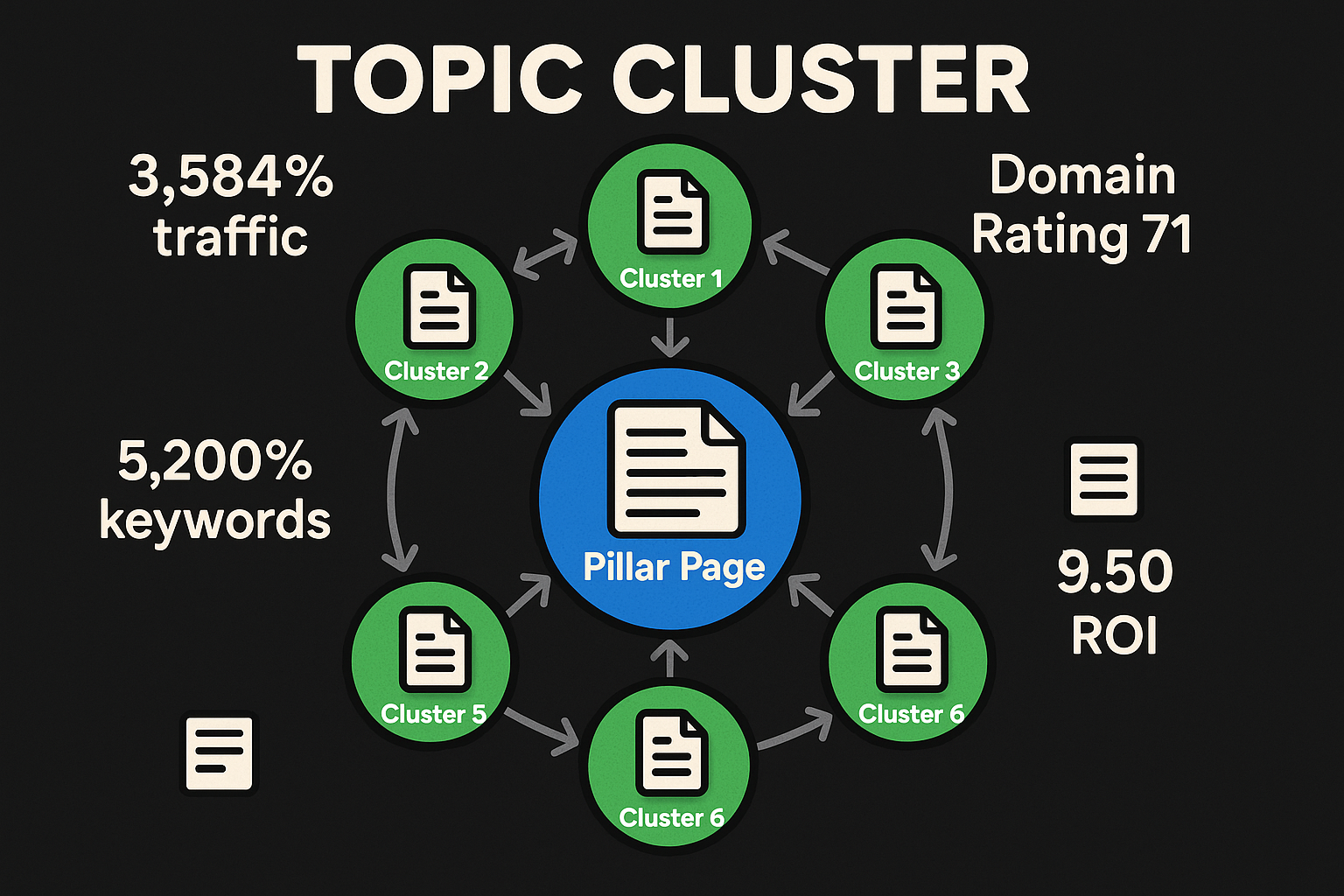
Why clusters win: This structure closely mirrors how search engines parse relationships and intent. By interlinking semantically connected pieces, you clarify topical authority and future-proof against algorithm shifts.
Semantic Structuring & Content Hierarchy
Algorithmic intelligence thrives on context. That means moving decisively beyond “surface” keywords to semantic relevance: mapping the actual universe of user queries, synonyms, related concepts, and intent variations around your pillar topics.
Advanced Heading Optimization
-
Headings (H1-H6) are more than decorations. A well-architected hierarchy guides bots and humans alike, signaling main topics (H1/H2) and nuanced angles or queries (H3-H6).
-
Each heading should answer a real question or introduce a meaningful subtopic. Avoid repetition and “stuffed” phrasing; instead, use clear, descriptive language that aligns with user search patterns. Content Depth, Relevance & Freshness Signals
-
Depth wins trust, both human and algorithmic. Instead of a single-paragraph answer, anticipate follow-on questions, edge cases, and related user journeys.
-
Context Mapping: Each page should provide a 360-degree view—definitions, supporting examples, actionable steps, and up-to-date references all layered logically.
-
Freshness is not just new dates. Add case studies, statistics, or updated perspectives regularly; dynamic sections (e.g., “Last updated with new algorithm insights”) show both engines and readers your site is a living resource.
Actionable Framework: Building High-Impact Topic Clusters
- Identify the Pillar Topic: Pinpoint a broad theme central to your audience (e.g., “Advanced On-Page Optimization”).
- Map Subtopic Clusters: Use tools like keyword research, People Also Ask, and competitor mapping to identify supporting questions and nuances (e.g., “Schema Markup for On-Page SEO,” “Internal Linking Frameworks,” “Content Freshness Strategies”).
- Design Your Hierarchical Structure: Draft an internal map connecting each cluster page to the pillar and to other relevant clusters, ensuring every connection is contextually justified.
- Optimize Heading Structure: For each page, develop a heading outline (H1-H6) that flows logically from overview to detail, with each heading targeting a specific sub-intent or semantic variant.
- Layer in Depth & Freshness: Populate every page with multiple content types: step-by-step guides, annotated visuals, real-world examples, statistics, and continual updates.
- Monitor & Iterate: Set quarterly reminders to review traffic and ranking data for each cluster; prune deadweight, expand high-performing pages, and update with new findings or questions. Checklist for Structuring Winning Content Clusters:
- [ ] Pillar topic identified, addressing broad user intent
- [ ] Supporting clusters mapped from keyword and intent research
- [ ] Interlinking framework drafted (visual cluster map)
- [ ] Detailed heading outline for every page (H1-H6)
- [ ] Depth of content: Q&A, examples, frameworks, stats
- [ ] Freshness mechanism in place (content reviews, date stamps, updated data)
- [ ] Monitoring plan for performance and new content opportunities
In practice, a page that nails these principles is instantly recognizable: a crisp, logical outline, each subheading progressively deepening understanding or utility, interspersed with smart internal links and a pulse of timely updates. This is content that doesn’t just earn a click—it earns brand equity from both Google and your audience.
Now that your content is built for both users and algorithms, let’s focus on the often-overlooked meta elements that can boost click-through and relevance.
Advanced Metadata Optimization Techniques
Metadata—the silent persuader at the crossroads of search—determines whether your meticulously crafted page earns a fleeting glance or a qualified visit. At the advanced tier, metadata optimization isn’t a rote exercise in keyword placement. It becomes both the art of intent-surfacing and the science of search psychology, wielded intentionally to coax higher click-through rates (CTR), sharpen topical relevance, and propel website SEO outcomes.
Elevating Title Tags: Beyond Keywords, Toward Compelling Clarity
A title tag’s mission is twofold: draw the click and instantly communicate value. Advanced on-page optimization leverages three powerful levers:
- Modifiers: Terms like “advanced,” “ultimate,” “step-by-step,” or “frameworks” signal depth and specificity, appealing to sophisticated searchers.
- Emotional Triggers and Power Words: Words such as “unlock,” “accelerate,” “definitive,” or “game-changing” stoke curiosity and signal exclusivity.
- Multi-Intent Targeting: Align title tags to overlapping user goals (e.g., learn and implement), stacking relevance for broader query capture. Before/After Title Tag ExampleBefore: On-Page SEO Optimization Guide | Company Name After: Advanced On-Page SEO Optimization: Actionable Frameworks & Strategies for Higher Rankings
Notice how the after version introduces “advanced,” “actionable frameworks,” and “higher rankings”—layering value, targeting both informational and commercial investigation intents.
Meta Descriptions: Transforming Scannable Snippets into Dynamic Invitations
If title tags open the door, meta descriptions are the handshake: an explicit, crafted pitch to the searcher’s subconscious. Advanced strategies include:
- Integrating Benefit-Rich Modifiers: Stress immediate outcomes (“boost rankings,” “drive organic growth”).
- Conversational Hooks: Open with a question or value statement that mirrors the searcher’s concern or pain point.
- Strategic Inclusion of Primary and Secondary Keywords: Not for stuffing, but for context—matching bolded query terms to increase snippet salience. Before/After Meta Description ExampleBefore: Learn the basics of on-page SEO optimization with our guide. Improve your website SEO for better rankings. After: Unlock advanced on-page optimization strategies in this definitive guide—packed with actionable frameworks, expert tips, and step-by-step examples to accelerate your website’s SEO performance and outrank the competition.
Compare the transformation: generic promise to outcome-focused value, clarity to compelling invitation, and sterile phrasing to a lively, multi-intent message.
Actionable Framework: Metadata Optimization Checklist
High-Impact Metadata Optimization Checklist
- Title tag within 55–60 characters—main keyword first, modifiers/power words next
- Incorporate advanced intent (e.g., “Advanced,” “Definitive,” “Step-by-Step”)
- Embed primary and secondary keywords contextually; avoid awkward stuffing
- Meta description 140–155 characters—clear unique benefit and call to click
- Utilize emotional triggers and outcome-driven phrases (“Unlock…,” “Get…,” “Boost…”)
- Mirror top user intents (informational, commercial, action)
- Distinct titles and descriptions for every URL—no duplication
- Preview SERP snippet to ensure cut-off isn’t mid-word or mid-message
- Ongoing A/B or multivariate testing to identify highest-CTR variants
Common Advanced Metadata Pitfalls to Avoid
- Over-optimization: Stuffing every possible keyword or stacking generic modifiers dilutes meaning and trust.
- Generic or Duplicate Metadata: Failing to differentiate metadata across similar pages can invite cannibalization—and reduce CTR.
- Neglecting User Intent: Ignoring the actual queries and motivations behind the search leads to uninspired, underperforming snippets.
Mastering metadata transforms invisible code into a visible competitive lever. When combined with sophisticated content structuring and seamless technical SEO, optimized metadata is a beacon—drawing both users and algorithms to your most important pages.
With high-performing content and metadata, it’s time to multiply authority through smart internal linking—connecting, contextualizing, and boosting SEO everywhere.
Internal Linking: Building Authority and Relevance
If metadata whispers your page’s value to search engines, internal linking is the megaphone—projecting authority, sculpting topical relevance, and directing both users and crawlers by invisible hand. In advanced on-page optimization, internal linking is less about scattered “see also” suggestions and more about engineering a robust, navigable information architecture that systematically lifts your most important content.
Content Silos and Topic Hubs: The Core of Strategic Linking
A silo is more than a buzzword—it’s a tight vertical of semantically related content, unified by a parent “hub” page. Structuring your content into silos creates clear pathways for search engine crawlers and keeps site visitors engaged, reducing bounce and increasing time on site. Each link is an intentional conduit, flowing internal PageRank towards your pillar assets.
Framework for Siloed Internal Linking:
- Identify Primary Pillars: Select key hub pages mapping to mission-critical topics (e.g., “Advanced On-Page Optimization”).
- Map Supporting Clusters: Each hub directly connects to detailed subpages (e.g., “Schema Markup,” “Anchor Text Frameworks,” “Internal Linking Audits”).
- Ensure Contextual Interlinking: Subpages cross-link to each other only where contextually relevant, always referencing the hub.
- Minimize Irrelevant Cross-Linking: Avoid “leakage” between silos that muddies topical focus.
The Art of Anchor Text: Diversity and Precision
Advanced internal linking demands surgical anchor text selection. Gone are the days of repetitive, exact-match anchors—instead, aim for:
- Natural language variants (e.g., “internal linking strategy,” “advanced anchor text tactics,” “guide to content silos”)
- Branded and partial-match anchors to spread semantic signals without tripping filters
- Descriptive anchors reflecting the context of the destination page, not just keywords Annotated Example:
Within a guide to technical SEO, you might write: “For a complete walkthrough of internal linking best practices, see our anchor text optimization framework. Explore additional content silo case studies to learn how strategic structures elevate rankings.”
Troubleshooting and Auditing Internal Links
No web ecosystem is free from missteps—broken links, orphaned pages, overused by-rote anchors. Proactive troubleshooting ensures your internal linking does its job:
Internal Linking Audit Checklist
- [ ] Crawl the site for broken or redirected internal links
- [ ] Identify orphaned pages (zero internal links in)
- [ ] Review anchor text diversity—flag repeated use of exact-match phrases
- [ ] Ensure every major pillar page is linked from >3 topically-supportive assets
- [ ] Prune irrelevant cross-silo links that disrupt topical authority
- [ ] Monitor internal link depth—priority pages should be reachable in 3 clicks or less
Actionable Framework: Maintaining Internal Link Health
- Schedule quarterly full-site crawls using tools like Screaming Frog or Sitebulb.
- Visualize silo structures; map all internal links with clustering diagrams.
- Systematically update or remove outdated, broken, or context-misaligned links.
- Maintain a living document of target anchors for key pages to guide editors and contributors.
Properly architected internal linking isn’t just technical hygiene, but a core driver of authority flow and topical clarity—ensuring your site’s expertise resonates at every click.
To unlock even richer results and greater search visibility, let’s add a technical layer: advanced schema markup.
Leveraging Schema Markup for Enhanced Visibility
In the ever-evolving dance of on-page optimization and technical SEO, schema markup is your backstage pass to the spotlight of the search results page. While strong content and metadata tell your story to search engines, schema markup lets you show—unlocking eligibility for coveted rich results and markedly increasing click-through rates for strategic queries.
Why Schema, Why Now?
Search engines crave structured, unambiguous context. Schema.org markup—when woven with intent—helps algorithms interpret your content as answers, not just information. Studies from industry leaders like Search Engine Journal have shown that well-implemented schema can mean up to a 30% jump in CTR, especially for competitive queries. For SEOs aiming to future-proof visibility, schema isn’t an extra—it’s essential.
Key Schema Types for On-Page Optimization Impact
Choose and layer schema types aligned with your page’s intent and content assets. Here’s a quick-reference table for the most impactful schema on transactional and informational content:
| Schema Type | Best Used For | Rich Result Example |
|---|---|---|
| FAQPage | Q&A or FAQ sections | Expandable FAQ dropdowns in SERP |
| HowTo | Step-by-step tutorials/guides | Numbered steps, often with images, in SERP |
| Product | Ecommerce and product detail pages | Price, availability, ratings, reviews |
| Review | Reviews on any page type | ★ ratings, reviewer info in SERP |
| Article | Editorial, blog, news | Enhanced headline, author, and thumbnail |
Step-by-Step Guide: Implementing Schema with JSON-LD
- Select the Suitable Schema Type(s)
Audit your page’s purpose: is it best described as a how-to, an FAQ, a review, or a product? For many advanced content pieces, layering multiple schemas (e.g.,
Article+FAQPage) maximizes eligibility. - Generate Your Schema in JSON-LD Format Use tools like Google’s Structured Data Markup Helper or trusted generators. Always output as JSON-LD, which is both Google-preferred and implementation-friendly.
- **Embed the JSON-LD Directly in your Page’s
**<head>**or Just Before ****</body>**Clean insertion ensures search engines can parse your schema without rendering the entire page DOM. Sample: FAQPage JSON-LD Implementation
<script type="application/ld+json">
{
"@context": "<https://schema.org>",
"@type": "FAQPage",
"mainEntity": [{
"@type": "Question",
"name": "What is advanced on-page SEO?",
"acceptedAnswer": {
"@type": "Answer",
"text": "It is the strategic orchestration of every element—from content to technical signals—ensuring maximal authority, relevance, and SERP visibility among modern search algorithms."
}
}]
}
</script>
- Validate Your Schema Markup Use Google's Rich Results Test or Schema.org Validator to check for syntax issues and eligibility errors. Pro tip: Test live URLs and raw code—some errors only surface in the live environment.
- Monitor Rich Result Appearance and Performance Track appearance in Google Search Console under “Enhancements.” Cross-reference with analytics for increases in CTR and impressions attributed to rich results.
Schema Success Checklist
- Appropriately matched schema types (align with page intent and user journey)
- JSON-LD generated and validated—zero errors in Rich Results Test
- Schema code embedded without interfering with core page scripts
- No spammy markup—avoid “hidden” or misleading schemas; only mark up what’s truly present
- Tracked in Google Search Console (Enhancements tab)
- Regular monitoring for changes in eligibility or errors, especially after major edits
Pro Insight: “Schema isn’t about gaming the system—it’s about clarifying your value, contextually and programmatically, in a search ecosystem that prizes clarity.” —Lily Ray, Senior Director, SEO
Schema markup is the technical brushstroke that transforms strong content into a search masterpiece. Paired with optimized internal links and deep metadata, it equips your site for the next evolution of search—where context, clarity, and rich experience reign.
Search engines and user intent don’t stand still. Here’s how to sustain and evolve your on-page optimization for long-term success.
Aligning with Evolving Search Algorithms and User Intent
Algorithms may be inscrutable, but one truth outlasts every update: search engines exist to surface the best answers for what people want in each fleeting moment. To future-proof your on-page optimization, you must not only speak the language of search, but think—persistently—in the dialect of user intent. This is the discipline of continuous alignment: adapting with shifting signals, staying ahead of the next intent curve, and evolving your content so users (and algorithms) find their answer, not just your keyword.
Step 1: Mapping User Intent—Build Your Blueprint
The difference between obsolete content and evergreen authority? Mapping real user journeys—in all their nuance—not merely keywords. Use an intent mapping worksheet as your living compass:
How to use it:
- List key target queries: Use analytics and keyword research tools to surface high-traffic, high-potential phrases landing on your site.
- Determine intent for each: Is the user seeking to learn, buy, compare, or solve? Mark each with primary (and any secondary) intent.
- Map to content assets: Align each intent to an existing page (pillar, supporting, FAQ, interactive, etc.) or flag gaps where new assets or updates are needed.
- Prioritize gaps: Highlight mismatches—where content fails to address true intent—for immediate optimization. Refreshing this worksheet quarterly will crystallize where your optimization should evolve next.
Step 2: Monitor Shifts in Search Behavior and Algorithms
Future-proofing means turning curiosity into habit:
- Track SERP changes: Note when your top queries show new rich features (people also ask, video, attributed answers)—your content may need to adapt format or schema.
- Monitor on-site metrics: Drop-offs, pogo-sticking, or low dwell time often signal intent mismatch—deep-dive into those pages first.
- Follow shifts in user language: Use tools like Google Trends, Reddit, and in-SERP “Related Searches” to watch how questions morph seasonally or after major news/events. Every significant shift is a call to review your mapping worksheet and realign content.
Step 3: Implement a Continuous SEO Audit Framework
Meet the SEO Health Audit Checklist—your operational playbook for never being caught off-guard by change:
- [ ] Review highest-traffic pages for intent match and update content where needed
- [ ] Analyze ranking losses and win-back opportunities—focus on fresh format, schema, or new subtopic
- [ ] Audit for new SERP features (featured snippets, FAQs, video)—adapt structure to compete
- [ ] Monitor internal link distribution—ensure top assets remain reachable and prominent
- [ ] Revalidate all schema markup post-major edits or updates
- [ ] Check headings and metadata for intent alignment and freshness
- [ ] Expand or pivot clusters as new questions emerge from insights/user feedback
- [ ] Log insights from support/sales/frontline feedback—these inform “real-world” intent shifts
- [ ] Repeat monthly/quarterly, with progress tracked over time
Adaptability beats static perfection. The best advanced on-page optimization is alive—always listening, always realigning with both algorithm shifts and the ceaseless current of user needs. When intent and delivery are synchronized, your website will not simply survive each new update; it will thrive at the front of every search.
Armed with advanced strategies across every layer, let’s recap the takeaways and put your new skills into action.
In a search landscape defined by relentless change, advanced on-page optimization is no longer optional—it’s the threshold for lasting visibility and authority. Throughout this guide, you’ve uncovered the deep strategies powering today’s high-performance sites: from architecting content into semantic topic clusters and meticulously layered heading hierarchies, to crafting metadata that compels both algorithms and real users, every page becomes a tightly tuned asset within your digital ecosystem.
You’ve learned how strategic internal linking—via silo structures and context-rich anchor text—channels authority and amplifies relevance, while advanced schema markup transforms raw information into rich search experiences. Just as importantly, you now have a blueprint for continuous alignment: mapping user intent, adapting to shifting algorithms, and making iterative improvement a habit—not an afterthought.
What elevates this guide is not just the theory, but the actionable frameworks, annotated visuals, and checklists delivered at every turn. Each section’s diagrams and step-by-step audits empower you to move confidently from insight to execution. Whether you’re refining an enterprise knowledge hub or scaling a challenger SaaS, these tools are designed for immediate adoption and future-proof growth.
Now, it’s your move. Harness the power of the provided frameworks—review your site’s content structure, metadata, internal links, schema, and continuous improvement plan. Run an audit against the checklists and see where the untapped potential lies. For more expert strategies, in-depth examples, or a personalized audit, subscribe, share this resource, or reach out for a demo. Advance beyond the SEO basics—implement these strategies today, and carve your position at the forefront of search.